I had spent years trying to fight the last two minutes of the cycle.
But the cycle had usually started hours earlier.
A bad day at work. Staying awake too late. Taking my phone to bed. Scrolling without purpose. Being alone when I was stressed. Seeing one suggestive post and continuing to feed the thought.
I didn’t need stronger willpower at the end of the cycle. I needed a better system at the beginning of it.
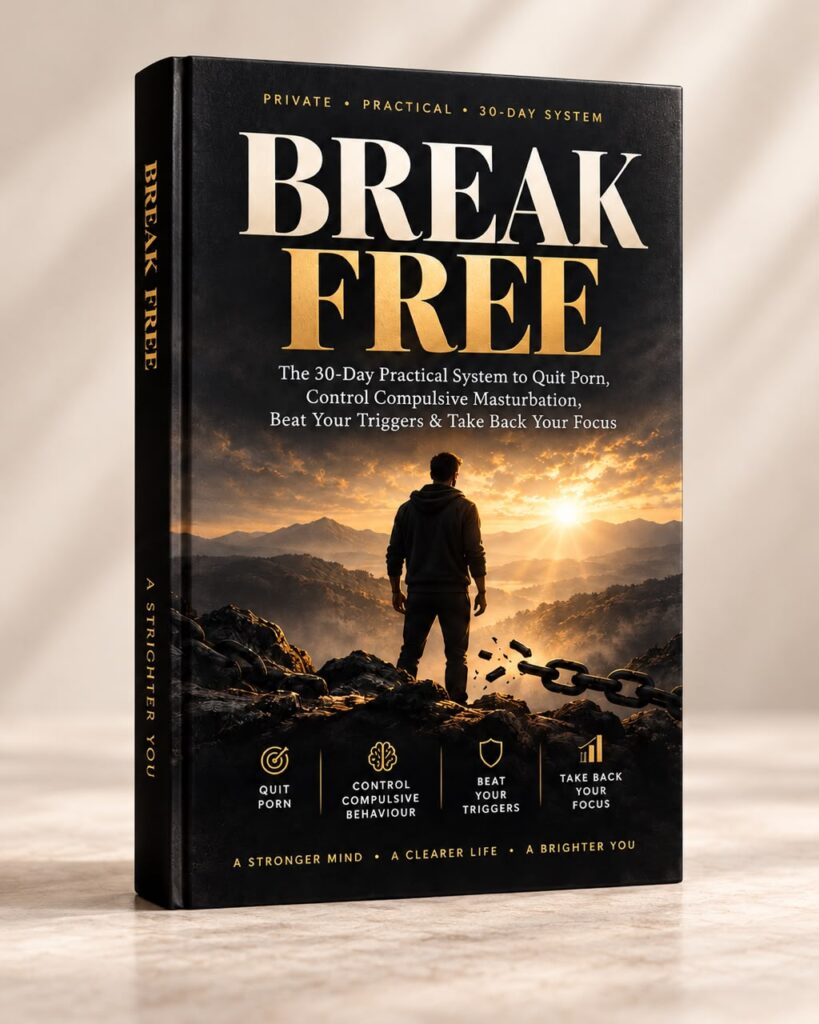
That's What Led Me To The BREAK FREE System.
I was looking for a process—not another motivational speech.
What stood out was that BREAK FREEwasn’t presented as one magic trick or one book I was supposed to read and forget.
What made BREAK FREE different for me was that it gave me something to do.
I wasn’t just learning why the habit happened.
I had tools for the moments when it actually happened.
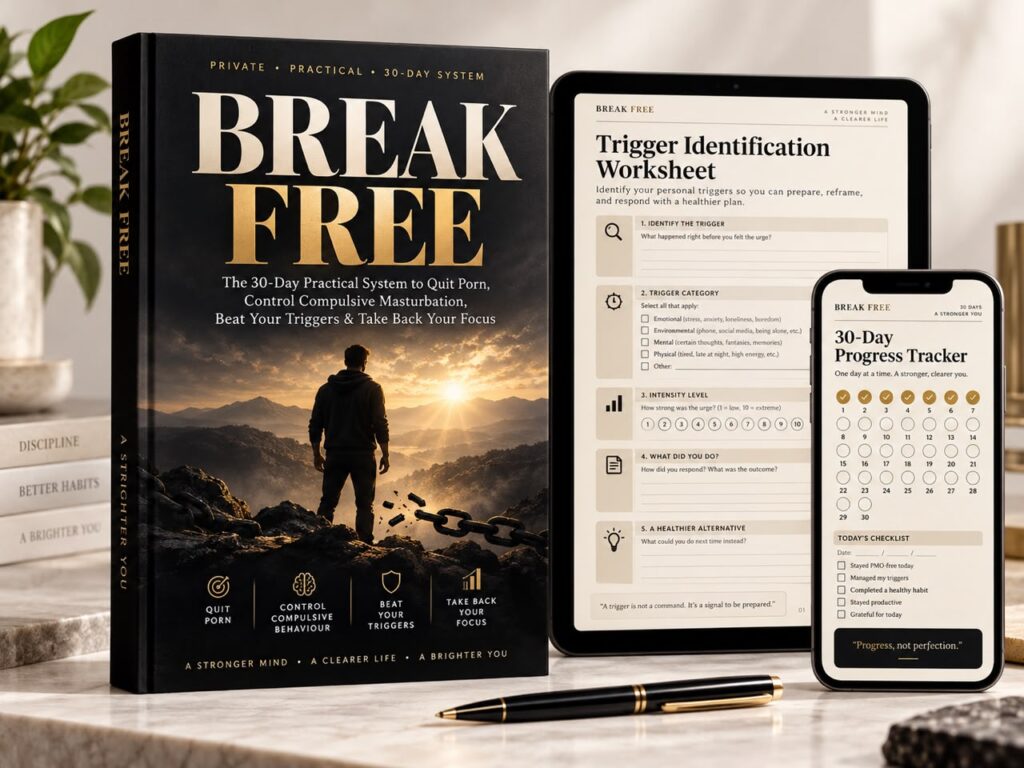
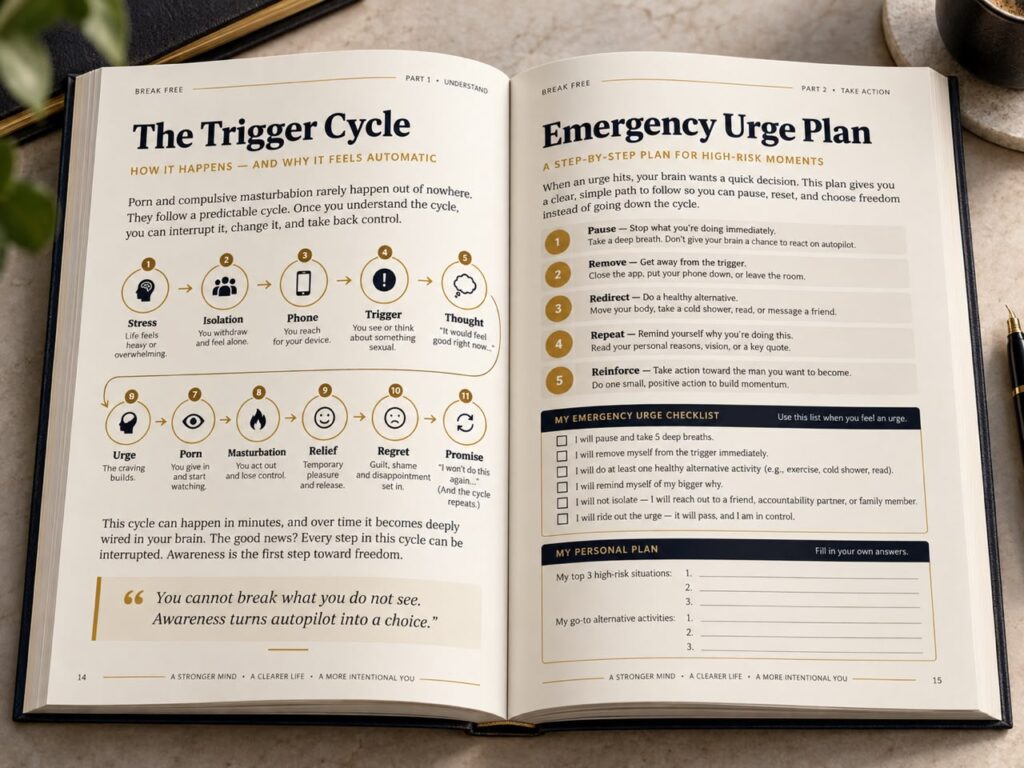
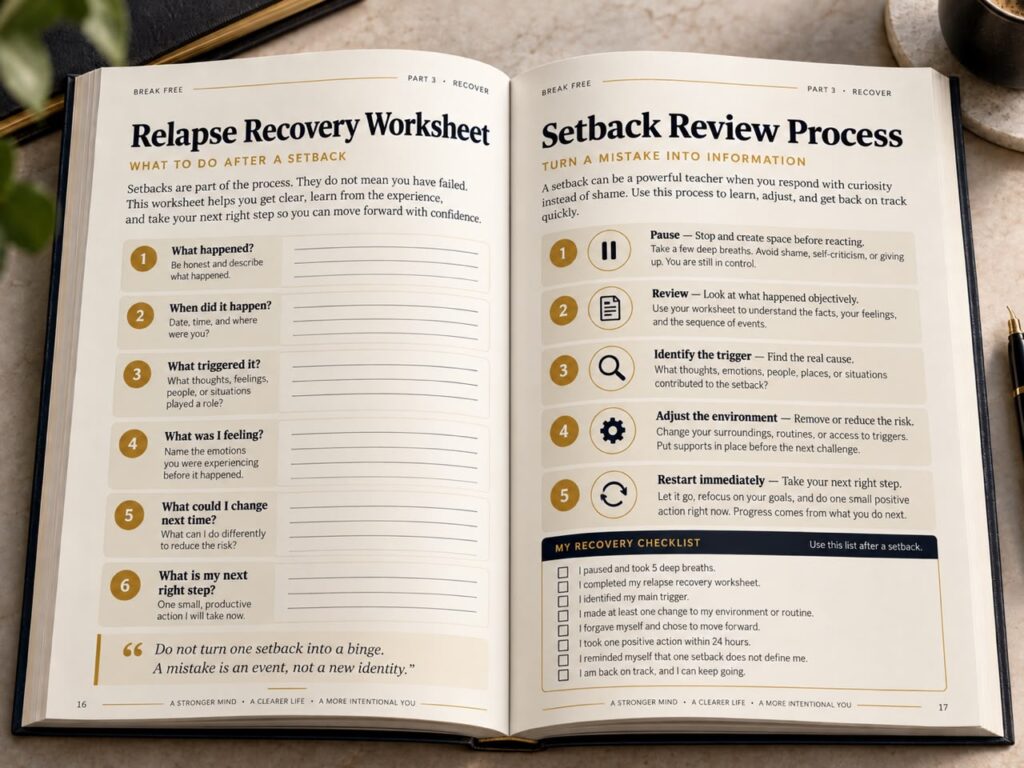
The guide helped me understand the cycle. The Trigger Worksheet showed me when I was most vulnerable. The Phone Detox Checklist helped me remove easy access. The Emergency Urge Plan gave me something to follow when an urge hit. The Relapse Review stopped me turning one mistake into a weekend of bingeing. The 30-Day Tracker kept me focused on actions instead of shame.
The First Week Wasn't About Being Perfect.
It was about making the habit less automatic.
01
1. I Found My Real Triggers
I noticed most relapses happened after stress, late at night, when I was alone with my phone. That meant I could prepare for those situations before the urge became intense.
02
2. I Changed My Environment
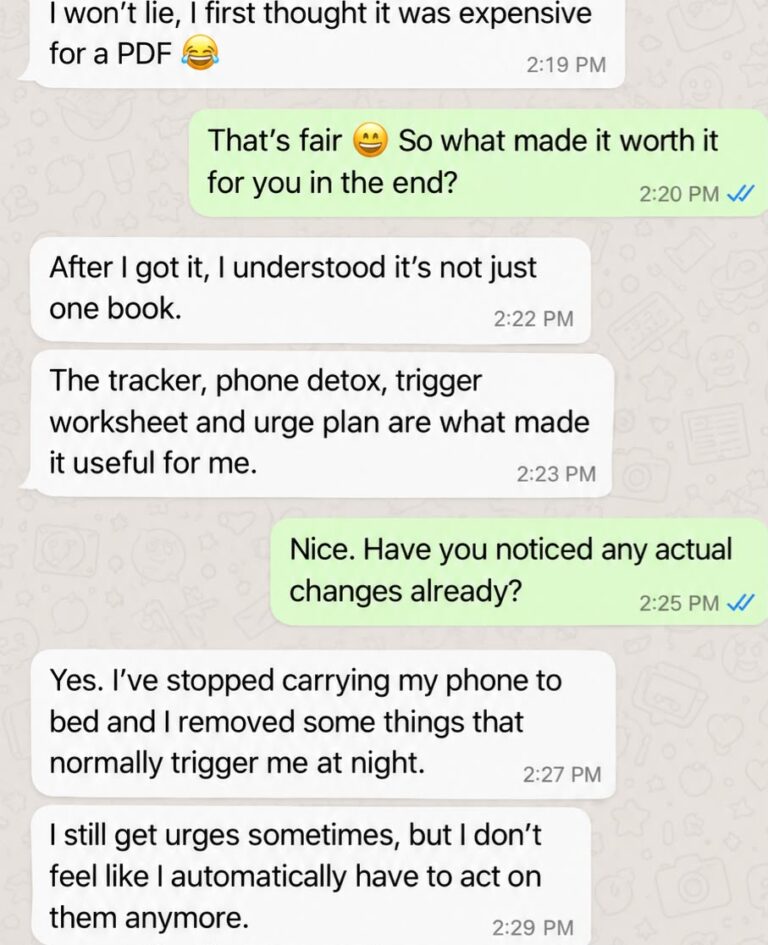
I stopped taking my phone to bed, removed the pages and apps that repeatedly pulled me in, and made private browsing less convenient.
03
3. I Used A Plan When The Urge Hit
Instead of arguing with myself in bed, I followed a short sequence: leave the trigger environment, delay the decision, move physically, and redirect my attention.
04
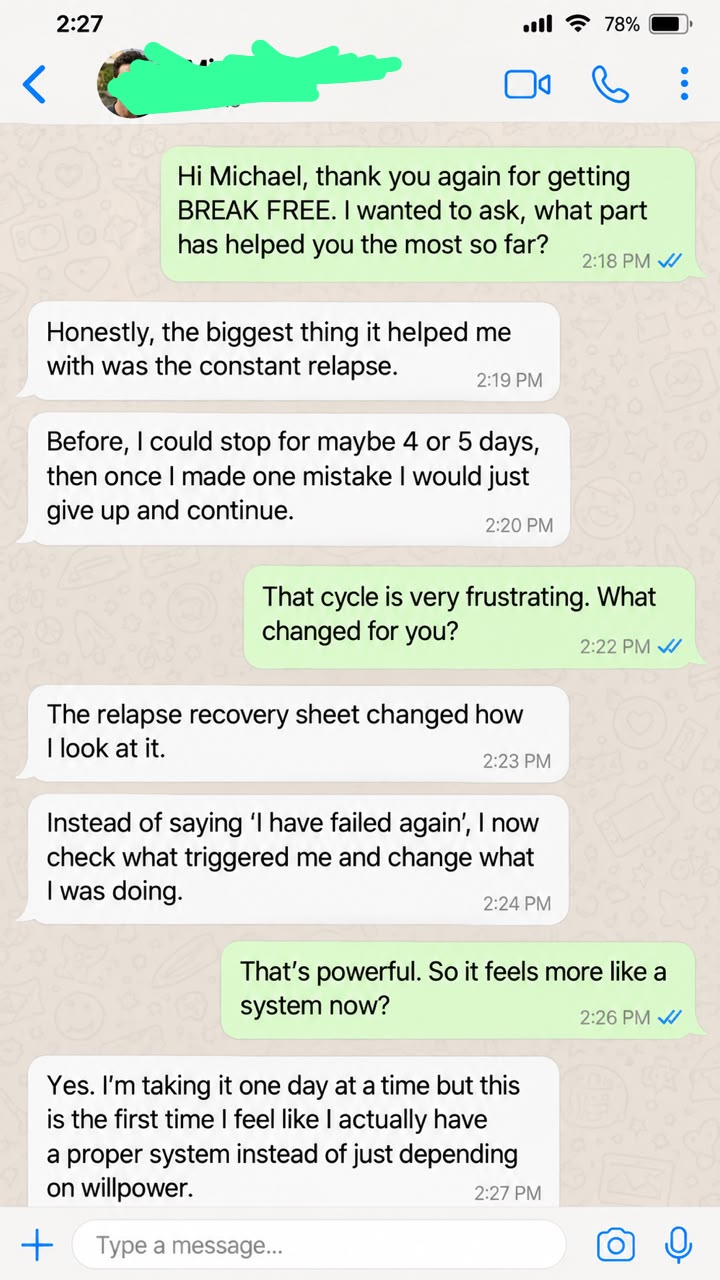
4. I Stopped Treating One Slip Like Total Failure
If I slipped, I reviewed what happened. What time was it? What was I feeling? What did I expose myself to? Then I changed the setup for next time.
And Slowly, Masturbation Stopped Feeling Automatic.
I won’t pretend I woke up on Day 2 and never felt another urge.
That isn’t what happened.
What changed was that urges stopped automatically becoming actions.
I could notice one without immediately feeding it.
I could have a stressful day without automatically reaching for porn.
I could go to bed without turning my phone into a trigger.
For the first time, I felt a gap between the urge and my decision.
That gap was where I started getting my control back.
Over the 30 days, the compulsive pattern became less frequent and less powerful because I was no longer giving it the same environment, access and automatic response.
My goal stopped being “never have a sexual thought again.”
My goal became: stop letting a private habit make decisions for me.
I Even Had A Setback.
And strangely, that setback showed me the system was working.
Before, one relapse would become:
“I’ve already failed, so I might as well keep going.”
This time, I opened the Relapse Review Sheet.
I saw exactly what happened: poor sleep, stress from work, mindless scrolling, alone late at night.
I changed the setup the next day and continued.
I didn’t need another Monday. I needed the next decision.
The Biggest Change Wasn't A Streak Number.
It was how I started feeling about myself again.
I wasn’t carrying the same constant disappointment.
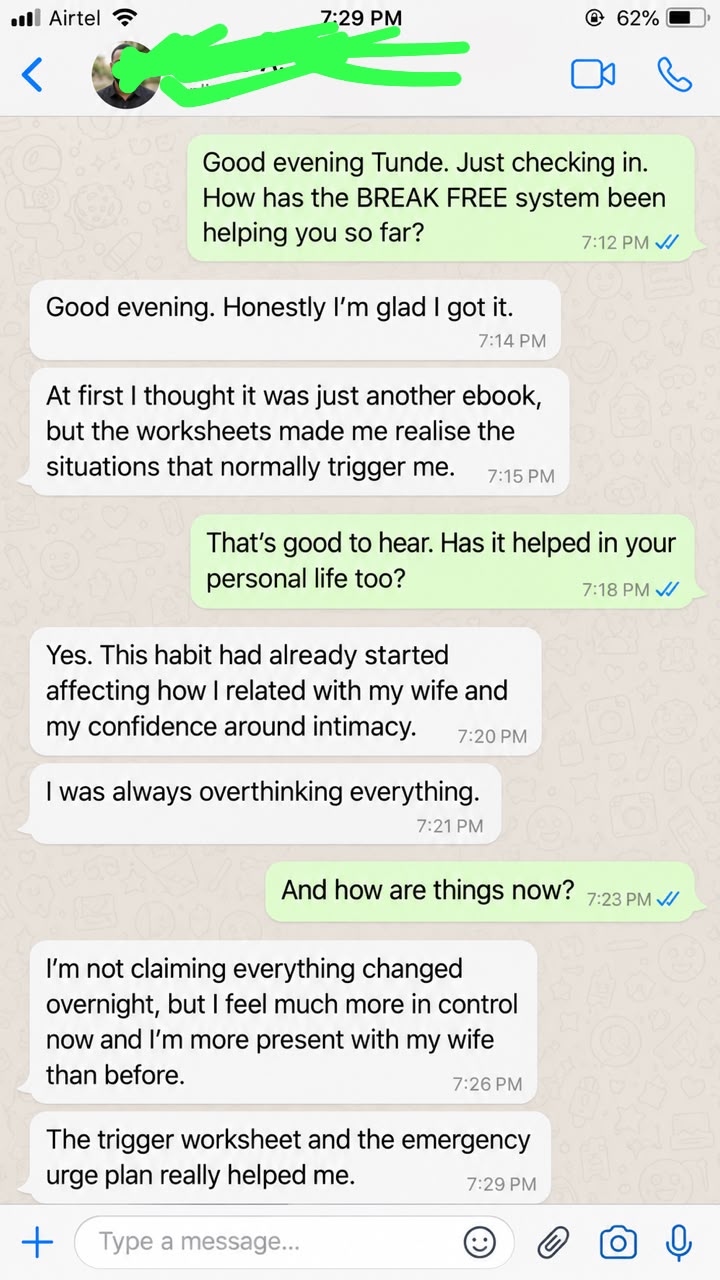
I became more present at home.
I stopped spending so much mental energy hiding, deleting, restarting and making promises.
Even with my wife, I felt less trapped inside my own head.
I could focus more on connection instead of treating intimacy like a test.
BREAK FREE didn’t magically solve every problem in my marriage.
But getting control of a habit I had been hiding helped me show up with more confidence, honesty and presence.
If Any Part Of This Story Sounds Familiar…
Maybe it’s not marriage for you.
Maybe you’re single and real relationships have started feeling harder than the screen.
Maybe you keep promising yourself you’ll stop.
Maybe it’s affecting your confidence, focus, sleep, work or studies.
Maybe you’re tired of counting streaks and starting again.
Maybe nobody even knows you’re struggling.
You don’t need to hate yourself into changing.
You need a practical system for the exact moments when the old pattern normally takes over.
The BREAK FREE System
A complete 30-day private behavior-change system designed to help you interrupt compulsive porn and masturbation patterns and rebuild control.
01
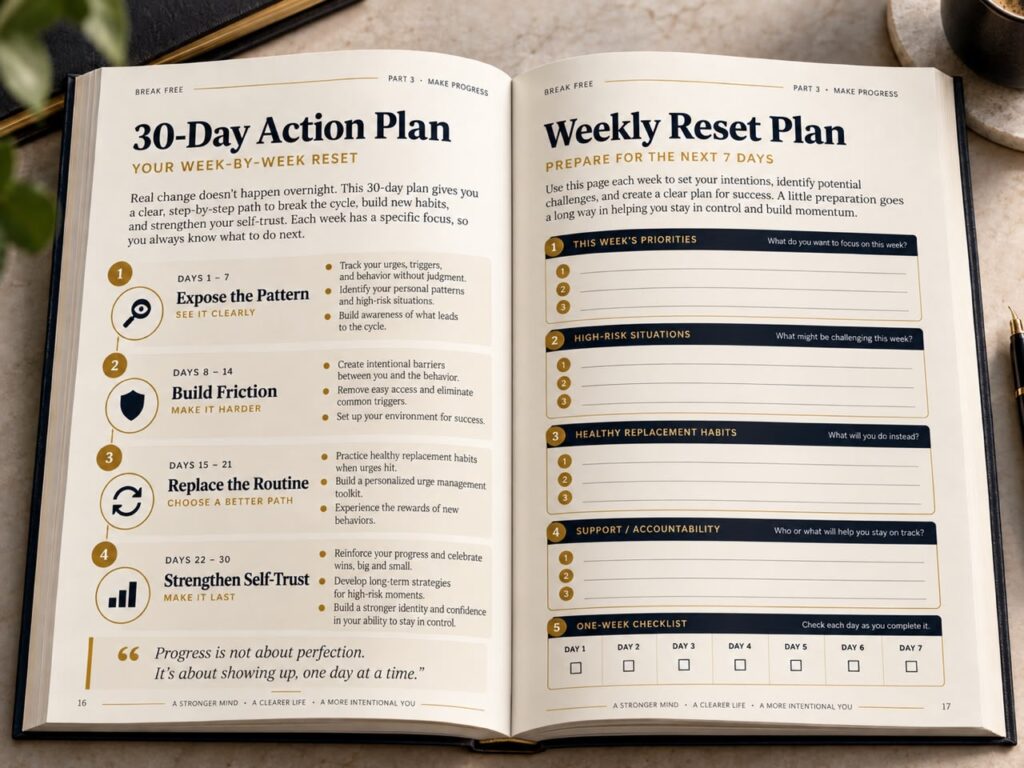
PHASE 1 — Expose The Pattern
Identify your triggers, high-risk times, emotional cues and the situations that usually happen before a relapse.
02
PHASE 2 — Build Friction
Change your phone, environment and access so the habit becomes less automatic and impulsive decisions require more effort.
03
PHASE 3 — Manage The Urge
Use a repeatable emergency protocol for the moments when temptation is strong and motivation is weak.
04
PHASE 4 — Replace The Routine
Create healthier responses to boredom, loneliness, stress and late-night vulnerability.
05
PHASE 5 — Recover Without Bingeing
Learn how to respond to setbacks without shame, giving up, or restarting the entire cycle.
06
PHASE 6 — Build Self-Trust
Use the 30-day tracker and personal rules to build consistency beyond the initial challenge.
Everything You Get Today
This is why BREAK FREE is not positioned as “just an ebook.” The guide explains the system. The tools help you execute it.
01
The BREAK FREE Core Guide
The complete step-by-step guide to triggers, urges, environment, routines, relationships, setbacks and long-term control.
02
The 30-Day Action Plan
A day-by-day roadmap so you know exactly what to work on instead of waking up hoping you stay disciplined.
03
Trigger Identification Worksheet
Pinpoint the emotions, apps, times, environments and situations most strongly linked to your relapses.
04
Emergency Urge Plan
A quick protocol to follow when the urge is strong and your thinking starts becoming impulsive.
05
Phone Detox Checklist
Reduce unnecessary sexual triggers and make impulsive access less convenient.
06
Relapse Recovery Worksheet
Understand what caused a setback and make immediate adjustments instead of turning one mistake into days of bingeing.
07
30-Day Progress Tracker
Track the behaviors that actually matter without making your entire identity depend on a perfect streak.
08
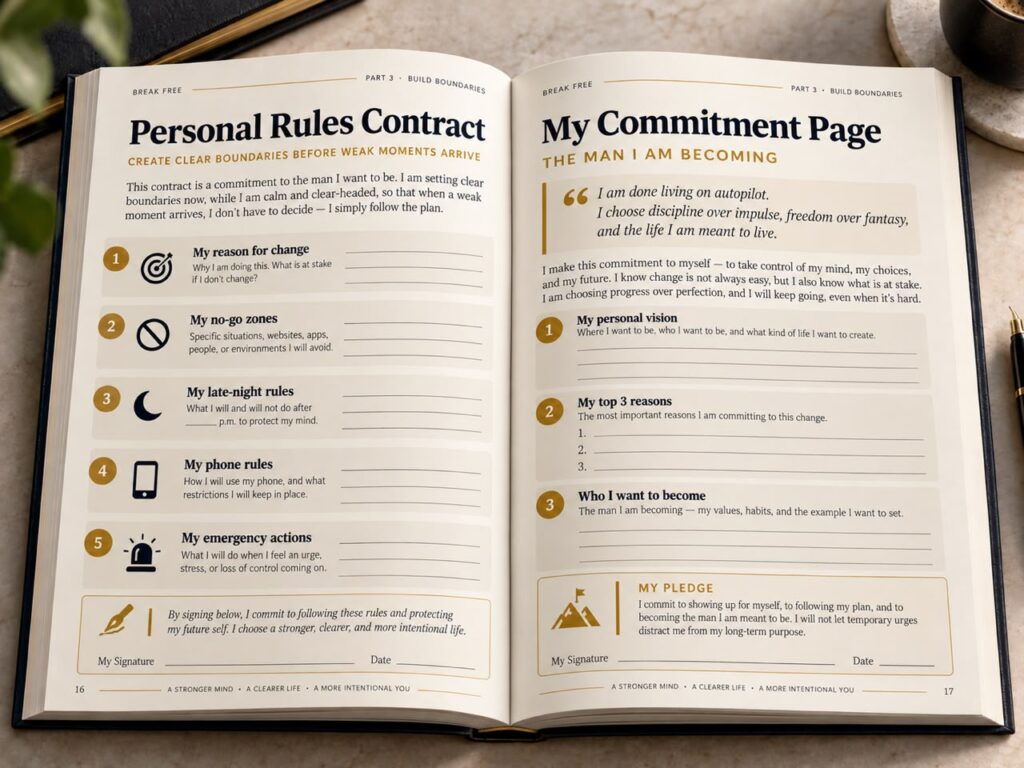
Personal Rules Contract
Create your own clear boundaries for phones, late nights, social media, privacy and high-risk situations.
Designed For A Problem Most People Don't Want To Discuss Publicly.
🔒
100% Private To Use
Work through the system on your phone, tablet or computer. No public group and no forced confession.
✓
Practical, Not Preachy
The system focuses on triggers, choices, environment and behavior—not shame or scare tactics.
⚡
Built For Weak Moments
The most important tools are designed for the moments when motivation is lowest, not just when you’re feeling strong.
↻
Keep It And Reuse It
The worksheets, checklists and tracker can be revisited whenever you notice an old pattern returning.
REAL READER FEEDBACK
See What People Are Saying About The BREAK FREE System
Breaking a private habit can feel lonely — but you’re not the only person
trying to regain control. Here are some of the messages and experiences
shared by people who have gone through the BREAK FREE System.
★★★★★ Private journeys. Real experiences. Real progress.
BREAK FREE isn’t one PDF. It’s a complete private 30-day system made up of the core training plus practical tools you can use when the real battle starts.
Combined Standalone Value
BREAK FREE Core Guide
The complete step-by-step training on triggers, urges, environment, routines, relationships, setbacks and long-term control.
₦7,500
30-Day Action Plan
A structured day-by-day implementation plan so you’re not left wondering what to do next.
₦4,000
Trigger Identification Worksheet
A practical worksheet for identifying your personal high-risk emotions, times, apps and environments.
₦2,500
Emergency Urge Plan
A quick-response protocol for the exact moments when temptation becomes strong and motivation is weak.
₦3,000
Phone Detox Checklist
A step-by-step cleanup process designed to reduce easy access and unnecessary digital triggers.
₦2,000
Relapse Recovery Worksheet
A structured process for understanding a setback, correcting the conditions and preventing one slip from becoming a binge.
₦2,500
30-Day Progress Tracker
A private tracker for monitoring actions, triggers and progress without becoming obsessed with a perfect streak.
₦1,500
Personal Rules Contract
Your own written boundaries for phones, late nights, social media, privacy and other high-risk situations.
₦1,500
TOTAL COMBINED VALUE: ₦24,500
If these resources were packaged as separate standalone tools, their combined value would be ₦24,500.
But You're Not Paying ₦24,500.
You can get the entire BREAK FREE System today for:
₦5,000
YOU KEEP ₦19,500 IN VALUE
One payment. The complete system. Immediate digital access.
🔒 Private digital purchase • Secure Selar checkout • Instant access after payment
Important: ₦24,500 is the combined standalone value assigned to the individual components, not a claim that the bundle was previously sold for ₦24,500.
Before You Decide
“Is this just another motivational ebook?”
No. The ebook is the teaching component of a larger 30-day system. You also get the action plan, trigger worksheet, urge protocol, phone checklist, relapse worksheet, tracker and rules contract.
“Does this claim masturbation itself is medically harmful?”
No. BREAK FREE is for people who feel porn use or masturbation has become compulsive, distracting, distressing or inconsistent with their own goals.
“What if I've relapsed many times?”
The system is specifically built around that reality. It teaches you to identify what happened, adjust the conditions, and continue without turning one setback into a binge.
“Do I need to tell anyone I'm doing this?”
No. It is designed as a private self-guided digital system. If the behavior is causing severe distress or feels impossible to manage, professional support is still worth considering.
You Can Make The Same Promise Again Tonight.
“Tomorrow, I’ll stop.”
Or you can stop depending on the promise alone.
Learn your triggers. Change the environment. Have a plan for the urge. Recover properly from setbacks. Build control one decision at a time.
You Don't Need Another “Last Time.” You Need A Better System.